 FREE UK DELIVERY ON ORDERS OVER £20.
 WORLDWIDE SHIPPING AVAILABLE
 FREE UK DELIVERY ON ORDERS OVER £20.
 WORLDWIDE SHIPPING AVAILABLE


Folic acid is one of the most commonly taken supplements, yet many people struggle to absorb and use it effectively. Signs you may not be absorbing folic acid can include persistent fatigue, brain fog, low mood, digestive discomfort, or symptoms of deficiency despite regular supplementation. In some cases, the issue isn’t intake, but conversion. Folic acid must be metabolised into active folate before the body can use it, and this process doesn’t work efficiently for everyone. In this guide, we explore the most common signs of poor folic acid absorption, why it happens, and how switching to an active folate supplement may better support energy, fertility, and overall wellbeing.
Quick answer: what does it mean if you’re not absorbing folic acid?
If you’re not absorbing folic acid properly, your body may struggle to convert it into active folate, meaning your cells can’t use it effectively. This can lead to symptoms of folate deficiency even if you’re taking supplements regularly.
Why folic acid absorption matters
Folate (vitamin B9) plays a critical role in DNA synthesis, red blood cell formation, nervous system health, and hormone regulation. Folic acid is the synthetic form of folate commonly found in supplements and fortified foods, but it must go through several conversion steps in the body before becoming usable.
For some people, this conversion process is inefficient. When folic acid isn’t properly absorbed or converted, the body may show signs of deficiency despite adequate intake, which can be confusing and frustrating.
Signs you may not be absorbing folic acid properly
Persistent fatigue or low energy
One of the most common signs of poor folic acid absorption is ongoing tiredness. Folate is essential for producing healthy red blood cells, which carry oxygen around the body. When this process is impaired, energy levels can drop, leaving you feeling drained even after rest.
Brain fog and difficulty concentrating
Folate supports neurotransmitter function and cognitive processes. If folic acid isn’t being converted into active folate, you may experience brain fog, poor concentration, or a feeling of mental heaviness that doesn’t improve with sleep.
Low mood or emotional changes
Folate is involved in the production of neurotransmitters such as serotonin and dopamine. Poor absorption may contribute to low mood, irritability, or emotional imbalance, particularly during times of stress.
Digestive discomfort or nutrient sensitivity
Some people notice bloating, nausea, or general digestive discomfort when taking folic acid supplements. This can be a sign that the body isn’t processing the synthetic form efficiently, leading to irritation rather than benefit.
Fertility or pregnancy-related concerns
Folate requirements increase during preconception and pregnancy. If folic acid isn’t being absorbed properly, it may not provide the expected support for reproductive health, which is why active folate is often recommended in fertility-focused supplementation.
Blood test results that don’t improve
In some cases, blood tests may show low or borderline folate levels even when supplements are being taken consistently. This can indicate a conversion or absorption issue rather than inadequate intake.
Why some people struggle to absorb folic acid
Not everyone processes folic acid in the same way. Factors that can affect absorption and conversion include genetic variations (such as MTHFR), digestive health, liver function, medication use, and overall nutrient status.
Because folic acid requires multiple enzymatic steps to become active folate, any disruption along this pathway can reduce how much the body can actually use.
Folic acid vs folate: why the form matters
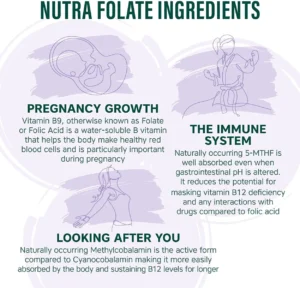
Folate is the biologically active form of vitamin B9 that the body can use immediately. Folic acid, by contrast, must be converted before it becomes active.
For people who struggle with this conversion, taking folate in its active form may provide more reliable support. This is why many modern formulations now use methylated or bioavailable folate instead of standard folic acid.
How active folate may support better absorption
Active folate does not require the same conversion process as folic acid. This means it can be absorbed and used directly by the body, making it a more suitable option for individuals who experience symptoms despite regular folic acid intake.
Active folate may support:
- Energy production and reduced fatigue
- Cognitive clarity and focus
- Emotional balance
- Fertility and pregnancy preparation
- Overall cellular health
NutraVit insight: choosing the right folate supplement
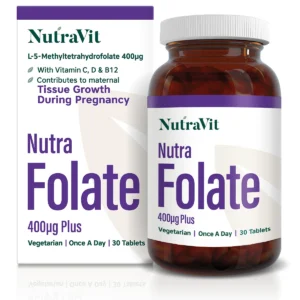
NutraVit’s NutraFolate Plus is formulated using folate rather than standard folic acid, supporting direct absorption and utilisation. This approach helps remove common barriers linked to conversion inefficiency, offering a more reliable way to support folate-dependent processes in the body.
For those who suspect they may not be absorbing folic acid effectively, switching to an active folate supplement can be a simple but meaningful change.
When to consider reviewing your folate intake
If you’re experiencing ongoing fatigue, cognitive symptoms, or fertility concerns despite supplement use, it may be worth reassessing not just how much folate you’re taking, but the form you’re using.
Supporting folate absorption is not about taking more, but about choosing a form your body can actually use.
A more informed approach to folate support
Understanding the signs of poor folic acid absorption can help you make more informed decisions about your health. Rather than assuming supplements aren’t working, it may be a matter of choosing the right format for your individual needs.
By focusing on bioavailable nutrients and listening to your body’s signals, it’s possible to support energy, mood, and long-term wellbeing more effectively.
Your Questions Answered
What are the signs you may not be absorbing folic acid?
Common signs include fatigue, brain fog, low mood, digestive discomfort, and unchanged folate blood levels despite supplementation.
Why would folic acid not work for everyone?
Folic acid requires conversion into active folate. Some people struggle with this process due to genetics, digestion, or nutrient interactions.
Is folate better than folic acid?
For many people, yes. Folate is already active and does not require conversion, making it easier for the body to absorb and use.
Should I switch supplements if I have symptoms?
If symptoms persist despite regular use, it may be worth discussing active folate options with a healthcare professional.


