 FREE UK DELIVERY ON ORDERS OVER £20.
 WORLDWIDE SHIPPING AVAILABLE
 FREE UK DELIVERY ON ORDERS OVER £20.
 WORLDWIDE SHIPPING AVAILABLE


Folate and folic acid are both forms of vitamin B9, but they are not the same, especially when it comes to fertility and pregnancy. Folate is the active form your body can use immediately, while folic acid must be converted before it becomes usable. For some people, this conversion process is inefficient, meaning folic acid may not provide optimal support during preconception or early pregnancy. Adequate folate levels are essential for DNA synthesis, cell division, neural tube development, and red blood cell formation. In this guide, we explain the difference between folate and folic acid, why the form matters for fertility and pregnancy, and which option may offer more reliable support.
Quick answer: is folate better than folic acid for pregnancy?
For many people, yes. Folate is the bioactive form of vitamin B9 and does not require conversion in the body, making it easier to absorb and use during fertility and pregnancy.
Why vitamin B9 matters for fertility and pregnancy
Vitamin B9 plays a central role in reproductive health. It supports:
- DNA synthesis and cell division
- Healthy egg and sperm development
- Neural tube formation in early pregnancy
- Red blood cell production
- Homocysteine regulation
Because early embryonic development happens rapidly, adequate folate status before and during early pregnancy is critical. In fact, neural tube development occurs within the first few weeks, often before pregnancy is confirmed.
This is why healthcare guidelines recommend ensuring sufficient vitamin B9 intake before conception.
What’s the difference between folate and folic acid?
Although often used interchangeably, folate and folic acid are not identical.
Folate is the naturally occurring, bioactive form of vitamin B9 found in leafy greens and modern bioavailable supplements.
Folic acid is the synthetic form used in fortified foods and many basic prenatal supplements. It must undergo several conversion steps, including processing by the MTHFR enzyme, before becoming active folate (5-MTHF).
If conversion is inefficient, the body may not receive the full biological benefit of supplementation.
Why conversion matters in fertility support
During preconception and pregnancy, nutrient efficiency matters. If folic acid is not properly converted, the body may struggle to maintain optimal folate levels even when supplements are taken consistently.
Reduced conversion can be influenced by:
- Genetic variations affecting the MTHFR enzyme
- Digestive health
- Liver function
- Nutrient imbalances (B6, B12, magnesium)
- Stress and lifestyle factors
For individuals with reduced MTHFR activity, active folate may provide more consistent support.
How folate supports early pregnancy development
Folate plays a direct role in:
Neural tube development
The neural tube forms the brain and spinal cord. Adequate folate intake before and during early pregnancy significantly reduces the risk of neural tube defects.
Cell division and placental growth
Pregnancy involves rapid cell replication. Folate ensures accurate DNA copying during this process.
Healthy blood formation
Increased blood volume during pregnancy requires adequate red blood cell production, which depends on sufficient vitamin B9.
These processes rely on usable folate, not just folic acid intake.
Is folic acid enough?
For many women, folic acid supplementation is effective. However, some individuals may not convert folic acid efficiently, meaning their cells may not receive adequate active folate.
In these cases, switching to a bioavailable folate supplement can provide more direct metabolic support without relying on conversion.
Choosing folate instead of folic acid does not mean taking more vitamin B9, it means choosing a form the body can use immediately.
Folate and male fertility
Vitamin B9 is not only important for women. Folate also supports:
- Healthy sperm production
- DNA integrity
- Homocysteine balance
Optimal folate levels may contribute to overall reproductive health for both partners during preconception planning.
Choosing the right supplement
When selecting a fertility or prenatal supplement, it is worth checking the form of vitamin B9 included.
Look for:
- Folate (5-MTHF or L-methylfolate) rather than folic acid
- Transparent labelling
- Clinically relevant dosage
- High-quality manufacturing standards
Active folate provides reliable support for those who may struggle with folic acid conversion, particularly during a time when nutrient efficiency is critical.
A practical option for active folate support
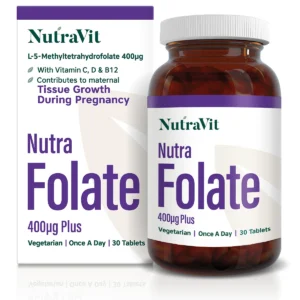
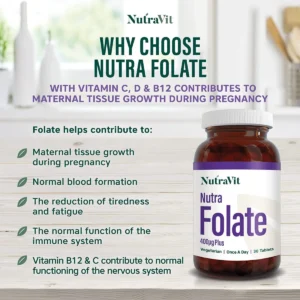
If you’re looking specifically for a bioavailable form of vitamin B9, NutraVit’s NutraFolate Plus is formulated using active folate rather than standard folic acid. This means it does not rely on MTHFR-dependent conversion before the body can use it.
By providing folate in its active form, NutraFolate Plus supports key processes involved in fertility and pregnancy, including DNA synthesis, healthy cell division, and red blood cell formation. For individuals planning to conceive or already pregnant, choosing an active folate supplement can offer a more direct and reliable way to support vitamin B9 status during this critical stage.
Your Questions Answered
Should I take folate or folic acid when trying to conceive?
Both provide vitamin B9, but folate is already active and may offer more reliable support for some individuals.
Is folate safer than folic acid in pregnancy?
Both are considered safe when taken within recommended guidelines. Folate may be preferred if conversion efficiency is a concern.
How much folate do I need for pregnancy?
Health authorities typically recommend at least 400 micrograms daily before and during early pregnancy. Always consult a healthcare professional for personalised advice.
Can men benefit from folate supplementation?
Yes. Folate supports sperm health and DNA stability, which are important for fertility.


